
'In case a particular industry has not passed on the benefits and if we receive complaints, we will take up the matter with the industry body concerned.'

55 road accidents, 20 deaths every hour.

'The state governments of Gujarat, Maharashtra and Tamil Nadu will be encouraged to consider measures of their own as the employment and economy in such export-oriented states will be affected.'

After a slew of programmes to facilitate electric-vehicle (EV) adoption in India, the NITI Aayog has said the government has done enough on incentives and now it's time to take the programme a step further with "strong signals" through regulations and mandates.
India is seeking either an exemption or a longer timeline on the pharmaceutical tariffs, expected to kick in by July 31.
Incidents in the maritime sector involving Indian seafarers, and foreign vessels in Indian waters rose by 21.6 per cent in 2024 to 186, highlighting the need to strengthen safety frameworks.
Experts say Indian Railways must grow its share in the freight market to remain financially sustainable.
India has a comparative edge over key competitors in a majority of products it exports to the US and stands to gain market share as the US raises tariffs on its major trade partners, NITI Aayog said on Monday. In its quarterly trade report, it recommended that the government fast-track the India-US free trade agreement with time-bound goals to resolve non-tariff barriers and finalise digital trade rules on data flows and e-signatures to support services exports.
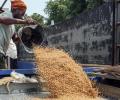
Very sensitive items -- such as apples, which carry political weight and are closely tied to farmer interests in states like Himachal Pradesh and Uttarakhand -- may face restricted concessions.
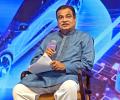
'I am not an aspiration-oriented politician.' 'This is the time to redefine politics.' 'Politics of power is not real politics.'
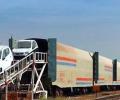
'In 2024-25, 1 million units of cars were transported via railways. This is 20.6 per cent of India's total car production of over 5 million.'
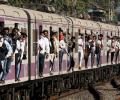
'Once all the sanctioned works have been commissioned, the railways will be in a position to run 4,500 trains daily.'
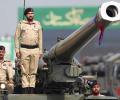
India has decided to submit a dossier at the upcoming Financial Action Task Force (FATF) meeting, calling for Pakistan to be placed back on the grey list of the global money laundering and terrorist financing watchdog.
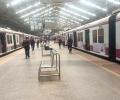
Railways ramps up project to instal AI-based cameras that can recognise faces.
The revised ceiling will be within the Rs 10 lakh mark.
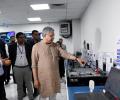
'I think that kind of change is coming. We should stay prepared for that change, whichever industry or sector we are in, we must be prepared.'

Re-entry into the list could have far-reaching consequences for Pakistan, including diminished foreign investment, increased borrowing costs, and tighter scrutiny from global financial institutions.
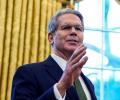
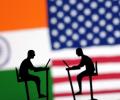
As in-person negotiations between India and the US kickstarted on Wednesday, Treasury Secretary Scott Bessent said he expected India to strike the first bilateral trade deal to avert President Donald Trump's reciprocal tariffs.
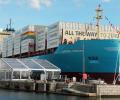
After US President Donald Trump announced a 90-day tariff pause for several nations, including India, global manufacturers are in a rush to ensure that bulk of their goods reach the US during this window. "The 90-day suspension of tariffs will be welcomed by shippers, but it should not be a cause for celebration.
 © 2026 Rediff.com - Advertise with us - Disclaimer - Privacy Policy - Sitemap - Feedback - About us - Terms of use - Grievances